
One97 Communications (OCL), the company that operates brand Paytm, received a nod from the National Payments Corporation of India (NPCI) to onboard new Unified Payments Interface (UPI) users. This comes nearly nine months after the Reserve Bank of India (RBI) placed an embargo on OCL to add new customers.

Despite a healthy March-May quarter (Q3FY22) show by global IT consulting firm Accenture, Indian IT companies shed up to 3 per cent on the National Stock Exchange (NSE) on Friday as analysts continued to highlight medium-term pain points for the sector. The Nifty IT index settled 0.9 per cent lower on Friday, as against a 0.9 per cent rise in the Nifty50 index. According to analysts at ICICI Securities, Accenture's Q3 saw moderation in year-on-year growth rate across verticals and US regions, which signals at likely normalisation in revenue momentum for Indian IT services going forward.

Consumption-related stocks, such as hotels, and quick service restaurants (QSRs), have been hitting the ball out of the park ahead. On the other hand, the Miss World Pageant scheduled for later this year in New Delhi, too, could provide some tailwind to these stocks, especially hotels and aviation. However, analysts suggest investors put their best foot forward and buy these counters only on a decline given the recent rally and economic headwinds.

Since the Union Budget, gold has become costlier by 8-9 per cent because of a 2.5 per cent increase in import duty to 12.5 per cent and about a 5 per cent depreciation in the rupee.
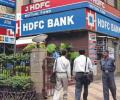
This will be the lender's first result after its merger with HDFC Ltd, effective from July 1, and will keep analysts glued to the management's earnings growth guidance for the merged financial behemoth.

'We expect the bull run to continue until economic growth continues.'

The rupee tumbled 19 paise to close at a fresh lifetime low of 77.93 against the US dollar on Friday as rising crude oil prices and unabated foreign capital outflows soured sentiment. A sell-off in equity markets and stronger greenback overseas also weighed on the domestic unit, forex traders said. At the interbank foreign exchange market, the local currency opened at 77.81 and witnessed an intra-day high of 77.79 and a low of 77.93 against the US dollar.

'Like all long-term bull markets, the Indian stock market will continue to climb the proverbial wall of worry.'
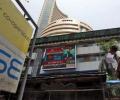
Analysts believe that investors should look at stocks that hit 52-week lows only if they have a dividend paying track record, are debt-free and have sound fundamentals.

Omkeshwar Singh, head, Rank MF, a mutual fund investment platform, answers your queries.
Vedanta Limited (Vedanta) helping its parent and group holding company Vedanta Resources to deleverage its balance sheet has started to strain its balance sheet. Vedanta's gross debt (consolidated) was up 24.3 per cent year-on-year (YoY) in FY23 and reached a six-year high of Rs 66,628 crore by the end of March. Similarly, its net debt went up 20.3 per cent YoY to Rs 45,706 crore at the end of FY23, up from Rs 38,228 crore a year ago; it was the highest since FY20.

There has been a sharp recovery in the headline corporate earnings in the April-June 2023 quarter (Q1FY24), after a dismal showing by early bird companies. The combined net profit of the 983 listed companies that have declared their quarterly results, so far, was up 64.7 per cent year-on-year to record a high of Rs 2.68 trillion in the first quarter, but growth in earnings remained lopsided because most of the incremental gains came from a handful of companies. Moreover, the quarterly numbers showed a continued slowdown in revenue growth.

International brands such as Daikin, Hitachi and Samsung, which were largely present in the premium products range, are getting aggressive on expanding their mid-range portfolios to penetrate into smaller cities and towns. While competition isn't hurting Voltas just yet, which has managed to retain its market share at 24.4 per cent as of September 30 (Q2), the main question is whether the company can defend its market share without compromising on profitability.

Investors should view any bounce-back in bank stocks as an opportunity to exit the pack, analysts suggested, as the worst may not be over yet. The recent quarterly results of HDFC Bank and Axis Bank disappointed the Street, triggering a marketwide selloff by foreign institutional investors, especially in banking counters. While HDFC Bank, which was the anchor for the market correction during the past week, ended 2 per cent higher amid short covering on Wednesday, Axis Bank's shares settled 3 per cent lower.

At the 45th Annual General Meeting of Reliance Industries (RIL) in August, chairman and managing director (CMD) Mukesh Ambani described the company as an "unputdownable book" with never-ending chapters of success. "Reliance grew from strength to strength because we internalised the founder's mindset of purpose, philosophy and passion," he said. Wednesday marked the 90th birth anniversary of RIL founder Dhirubhai Ambani.
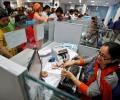
The rally in PSBs, analysts feel, was more a knee-jerk reaction to the development, and the actual benefits will start to accrue once the addition takes place in 2024. "The actual benefit for banks from the inclusion in JP Morgan's EM Index will accrue from June 2024 onwards. "Until then, the larger fundamentals of the market will dictate the moves. "Once the initial euphoria subsides, bond markets will look to global cues which may trigger fresh selling," said Siddharth Khemka, head of retail research, Motilal Oswal Financial Services.

Re-rating of Axis Bank's stock may continue in the near-future, believe analysts, as the risk-reward on the stock remains favourable amid healthy financials. The bullish stance comes after the Mumbai-based lender delivered a strong outperformance in the March quarter of fiscal year 2023-24 (Q4FY24) on core pre-provision profit and net profit, with improving asset quality. Axis Bank's net interest margin (NIM) expanded, against expectations, even in a tough market.

Declining prices of food items like vegetables pulled down retail inflation to 5.59 per cent in July, bringing it back within the RBI's comfort zone after two months, official data showed on Thursday. The retail inflation based on the Consumer Price Index (CPI) had remained above 6 per cent during May and June. The government has mandated the RBI to maintain retail inflation at 4 per cent, with a margin of 2 per cent on either side. The CPI based inflation stood at 6.26 per cent in June 2021 and 6.73 per cent in July 2020.

Credit card spending in September recorded strong growth of 25 per cent year-on-year (Y-o-Y), marking the highest increase in six months. Even as many banks saw higher slippages during the July-September quarter of 2024-25, spending growth exceeded 20 per cent for the first time since February. According to the latest data released by the Reserve Bank of India (RBI), September spending reached Rs 1.76 trillion, compared to Rs 1.42 trillion in the same period a year ago. In August 2024, credit card spending was Rs 1.68 trillion.

As share of cash volumes in trading mix sees decline, it will result in moderation of profitability from core broking operations.

Only six sectors are likely to report good set of numbers in Q4 FY15.

The companies that have seen sharp erosion of market wealth include YES Bank, Indiabulls Housing Finance, Zee Entertainment, Vodafone Idea, and Bharat Heavy Electricals.

With the markets scaling new highs, as many as 43 stocks from the Nifty50 index and 27 of the 30 scrips that are part of the S&P BSE Sensex are trading above their respective 200-day moving average (DMA). The 200-DMA is seen as one of the most relevant trend indicators by investors and traders, who believe that stocks and indices trading above this level possess strength and are likely to rally in the short to medium term, while the ones trading below this level are viewed as bearish and expected to see a sell-off. Wipro, UPL, Kotak Mahindra Bank, Hindalco, Infosys, Cipla, and Adani Enterprises are the only stocks from the Nifty50 pack that are still below their respective 200-DMA, the exchange data suggests.

With slippages increasing every quarter, any derailment on growth or change in customers' repayment behaviour after moratorium may impact the overall asset quality. Correction, though, presents attractive buying opportunities, given the bank's sustained leadership position.

Will Infy spring a surprise in subdued second quarter?

Through the IPO, Burger King has raised Rs 450 crore, which will be used to rollout new outlets and retire debt.


ICICI Bank and SBI were among the top Sensex gainers along with FMCG majors ITC and HUL.
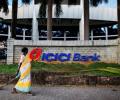
An in-line ICICI Bank result for the quarter ended March 31, 2024, has led to analysts raising target price and earnings per share (EPS) forecast on the stock. ICICI Bank, they said, appeared least vulnerable to regulatory action on its digital offerings or for risk monitoring lapses.

'The correction could take two to three months and traders need to be careful.' 'For investors, this could be a good time to nibble in.'

As many as eight companies have completed their share buyback plans in the first quarter of 2014-15, purchasing stocks worth nearly Rs 222 crore (Rs 2.22 billion) which is 75 per cent of the collective target.

Despite price correction, policies that support the yellow metal will remain in place in the foreseeable future.

India's corporate sector is likely to report a slowdown in revenue growth and earnings for the July-September 2023 period (Q2FY24), according to earnings estimates by brokerages, after the country's top listed companies posted higher than expected profits for the first quarter. The combined net profit of Nifty50 companies, based on brokerage estimates, is expected to have grown by 19.6 per cent year-on-year (Y-o-Y) to Rs 1.75 trillion in Q2FY24 - a sharp deceleration from 37.6 per cent Y-o-Y growth in the combined earnings of index companies in the April-June 2023 period. According to estimates, the combined earnings in the second quarter would be down 8.8 per cent on a quarter-on-quarter (Q-o-Q) basis and the lowest in the past three quarters.

With equity and commodity exchanges allowed to enter each other's areas from October, brokerages are pump-priming their businesses to allow their clients seamless trading in commodities and equities.

The Reserve Bank of India's latest order prohibiting Bajaj Finance from sanctioning and disbursing loans under its 'eCOM' and 'Insta EMI Card' products may not have serious implications on the non-banking finance company's profitability, provided the ban is lifted within six to eight weeks, analysts said. "In a surprise move, the RBI has asked Bajaj Finance to stop sanction and disbursal under two of its digital lending products. "While the move is negative, the speed of correction will be key to reinstate products," global brokerage Jefferies said in a report.

The rupee plunged 90 paise to close at an all-time low of 80.86 (provisional) against the US dollar on Thursday after the US Federal Reserve's interest rate hike and its hawkish stance weighed on investor sentiments. Forex traders said the US Fed's rate hike and escalation of geopolitical risk in Ukraine sapped risk appetite. Moreover, the strength of the American currency in the overseas market, a muted trend in domestic equities, risk-off mood and firm crude oil prices weighed on the rupee.

Despite the best ever quarterly net profit of Rs 3,091 crore during April-June of financial year 2023-24 (Q1FY24), challenges are mounting for InterGlobe Aviation-run IndiGo in the near term, said analysts. Given this, most brokerages have retained their ratings from 'buy to underperform', as well as their target price for the stock. For instance, Motilal Oswal Financial Services has retained its 'neutral' rating on the scrip as it believes the low-cost airline is facing teething issues at present.

Investor forum wants govt to take over exchange, raises doubts on claims of matching stocks; NSEL says default by brokers to be dealt with legally.

You may have to bend some rules, extend favours and help each other beyond what is expected of your profile.

The US Fed interest rate decision, domestic macroeconomic data announcements and ongoing quarterly earnings are some of the major factors that will drive the stock markets in a holiday-shortened week, analysts said. Besides, monthly auto sales numbers and the LIC IPO will also remain in focus, they added. Equity markets will remain closed on Tuesday for Id-Ul-Fitr (Ramzan Id). "The market is likely to kick off this week on a sombre note after a sharp fall in the US market then the focus will shift to the outcome of the US FOMC meeting, which is crucial amid record inflation and growth worries.
